1995 ‘One Million Hectare Peatland Development Project’, the ‘Central Kalimantan Mega Rice Project’ and the ‘Merauke Integrated Food and Energy Estate’ (MIFEE) which alone targeted 1.6 million hectares for food crops, energy crops and livestock in the 2010s.
One of the first of the new Food Estates to be announced was the ‘Delta Kayan Food Estate’ (DeKaFE) in North Kalimantan during 2011 (Lou et al. 2025, Setyo and Elly 2018, Galundra et al. 2010).
Sustainability Trade-offs
The suitability of land for different types of agricultural crop will be a critical factor in the productivity of Food Estates and food production needs to carefully balanced against the impacts of each land-use type on biodiversity.
The diversity and composition of species and the quality of habitats on and around cleared land will vary across the landscape so that some areas should be prioritized for conservation over others. For example areas of high biodiversity value and low potential for agricultural productivity.
High levels of carbon are sequestered and stored by forests and the implications for global and local climates of changes in forest cover will also have knock on effects on agricultural productivity and the risk of extreme weather related disasters.
Thus the impacts of Food Estates on biodiversity, climate and disaster risk must be traded-off against the benefits for food security and livelihoods.
Let us take a look at each of these issues in turn in our three case study provinces.
Land-use changes
- Policy on spatial plan, forest classifications,
- Land-use changes (spatial data: land expansion for food estate)
Biodiversity Trends
Indonesia is one of the world’s largest and most biodiverse countries. It contains 10% of the world’s flowering plant species, 12% of its mammals, 16% of its reptiles and 17% of its birds. Among these, the species threatened by extinction are 63 mammals, 21 reptiles, and 140 birds (CBD Secretariat 2016).
Indonesia is party to the Convention on Biological Diversity (CBD) and is recognized as one of 17 megadiverse countries, hosting two of the world’s biodiversity hotspots (von Tintelen, Arida, and Hauser 2017). Not only is Indonesia home to a huge diversity of fauna and flora, its forests contain the second highest number of indigenous medicinal plants in the world - second only to the Amazon rainforests (Elfahmi, Woerdenbag, and Kayser 2014).
Yet its rich biodiversity is threatened by the widespread degradation of habitats through over exploitation for Oil Palm, logging, mining and infrastructure. Among ASEAN countries, it had the highest number of invasive species in 2016-2017 and the second highest number of all threatened species (von Rintelen, Arida, and Häuser 2017).
At the same time, around 40 million people among Indonesia’s rural population rely on biodiversity for subsistence (CBD Secretariat 2016). Not only does the loss of biodiversity represent a collective impoverishment of the world, but it threatens the livelihoods of some of Indonesia’s poorest people.
So how might Food Estates influence biodiversity in our three case study provinces?
Let’s see how forest clearance for Palm Oil Plantations impacts biodiversity.
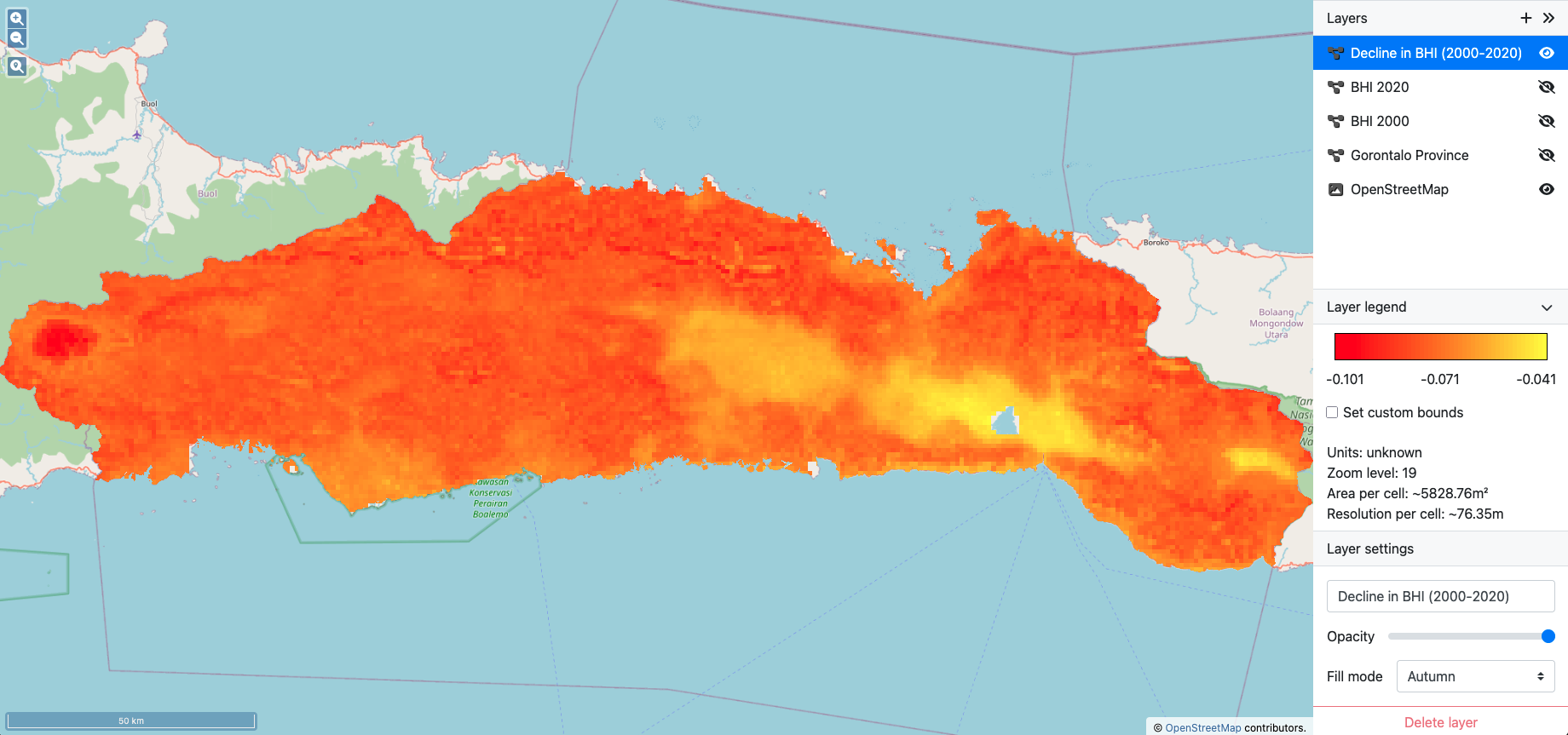
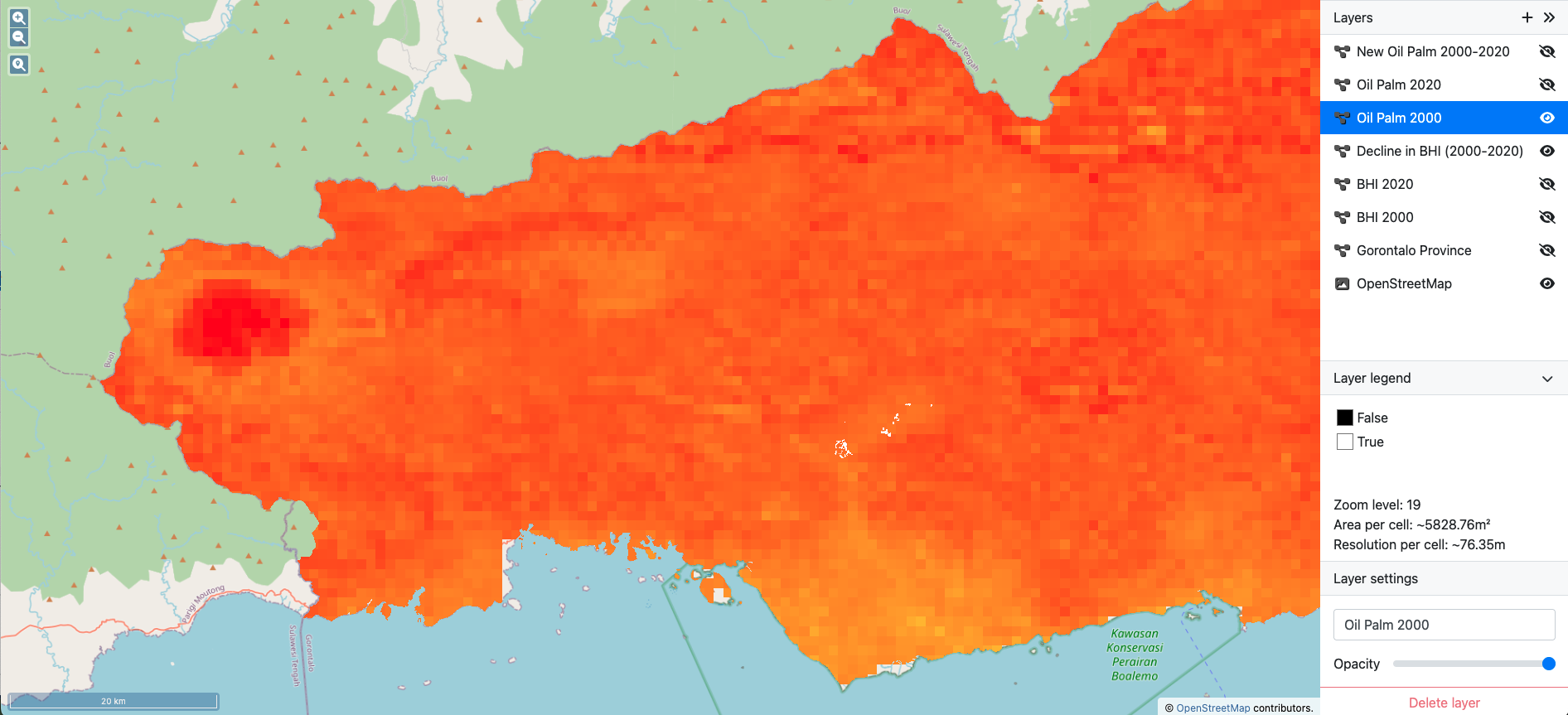
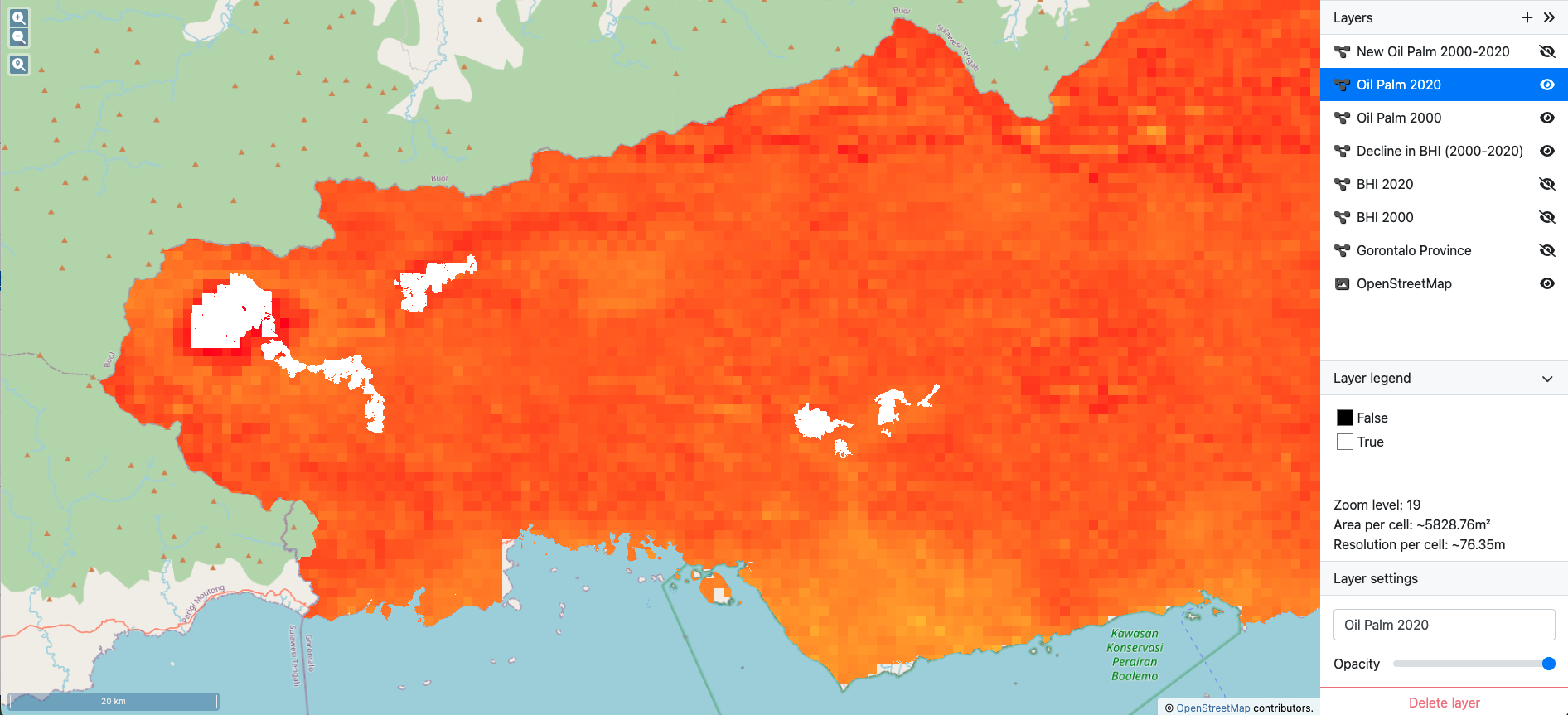
This map shows the change in biodiversity habitat intactness (BHI) between 2000 and 2020 in Gorontalo Province.
In the western corner there is a patch of relatively high decline in BHI.
The probable cause of this is the introduction of a new Palm Oil estate to the area (shown here in white) which appears to have had knock-on impacts on biodiversity into the surrounding forest.
Among the multiple causes of these localized declines in biodiversity we have good evidence of the specific impacts of the clearance, fragmentation and degradation of forests.
While the loss of habitat has the most obvious impact on forest species, there are also ripple effects on biodiversity which extend through space and time.
Forest clearance and infrastructure reduce the connectivity of habitats on the fringes of forests, reducing the available habitat for many animal species. This can lead to ‘empty forest syndrome’ in which areas of forest become devoid of large vertebrates. This in turn, interrupts seed-dispersal, especially for large-seeded trees, leading to increased clustering of seedlings which reduces seedling survival and hinders the recovery of damaged or selectively logged forests and also changes the composition of regrowth forest on abandoned agricultural lands. Over the long-term this will shift forest margins towards lower density trees whose wind-dispersed seeds reach more widely and will eventually reduce the overall carbon stock density. (Lewis, Edwards, and Galbraith 2015) .
Degradation of forests also contributes to increased risk of wildfire. While natural fires in humid tropical forests are extremely rare, logging and fragmentation increase fuel loads, create warmer, drier conditions and multiply ignition sources leading to increased instances of fires. In the aftermath of fires primary birds are replaced by non-forest species, repeat burning risk increases and eventually the forest can shift to savanna type vegetation with permanent loss of species and ecosystem functions relative to forest habitats (Lewis, Edwards, and Galbraith 2015).
Not only do these impacts have significant implications for long-term biodiversity trends but they also contribute to increases in carbon emissions.
- Crops, plantations, birds
Carbon emissions and storage trends
Global and local climates are facing increasing pressure as a result of decades of land-use change.
For at least the past two decades the main source of greenhouse gas (GHG) emissions in Indonesia has been land use, land-use change and forestry including peat fire (LULUCF).
In 2014 the sector’s contribution to national greenhouse gas emissions was 53% of the total 1.84 million Gg CO2 equivalent (MEF 2018).
Correlations have been observed between deforestation, rainfall and the frequency of large-scale fires in the southern region and central regions of Kalimantan (Spessa et al. 2015) reflecting an increasing sensitivity to dry conditions due to use of fire to clear and prepare land on degraded peat (Field et al. 2016).
The contribution of deforestation, forest degradation, and plantation agriculture to increasing incidences and severity of fires (Adrianto et al. 2019) not only has long-term implications for climate change but also has direct impacts on human health. Fires emit excessive particulate matter pollution which contributes to declining regional air quality in rural and urban areas (Rahman, White, and Ma 2024; Marlier et al. 2015; Hein et al. 2022). Health effects of PM2.5 pollution from annual peatland fires include premature deaths of infants and adults, hospitalisations for respiratory diseases, severe asthma and lost work days from ill health (Hein et al. 2022).
In addition to carbon emissions and air pollution from land use change and fires, the global carbon and water cycles are also significantly influenced by the response of tropical forests to changing rainfall patterns in ways that could create a reinforcing feedback between worsening drought conditions and increasing carbon flux into the atmosphere (Wang et al. 2014; Lawrence and Vandecar 2015).
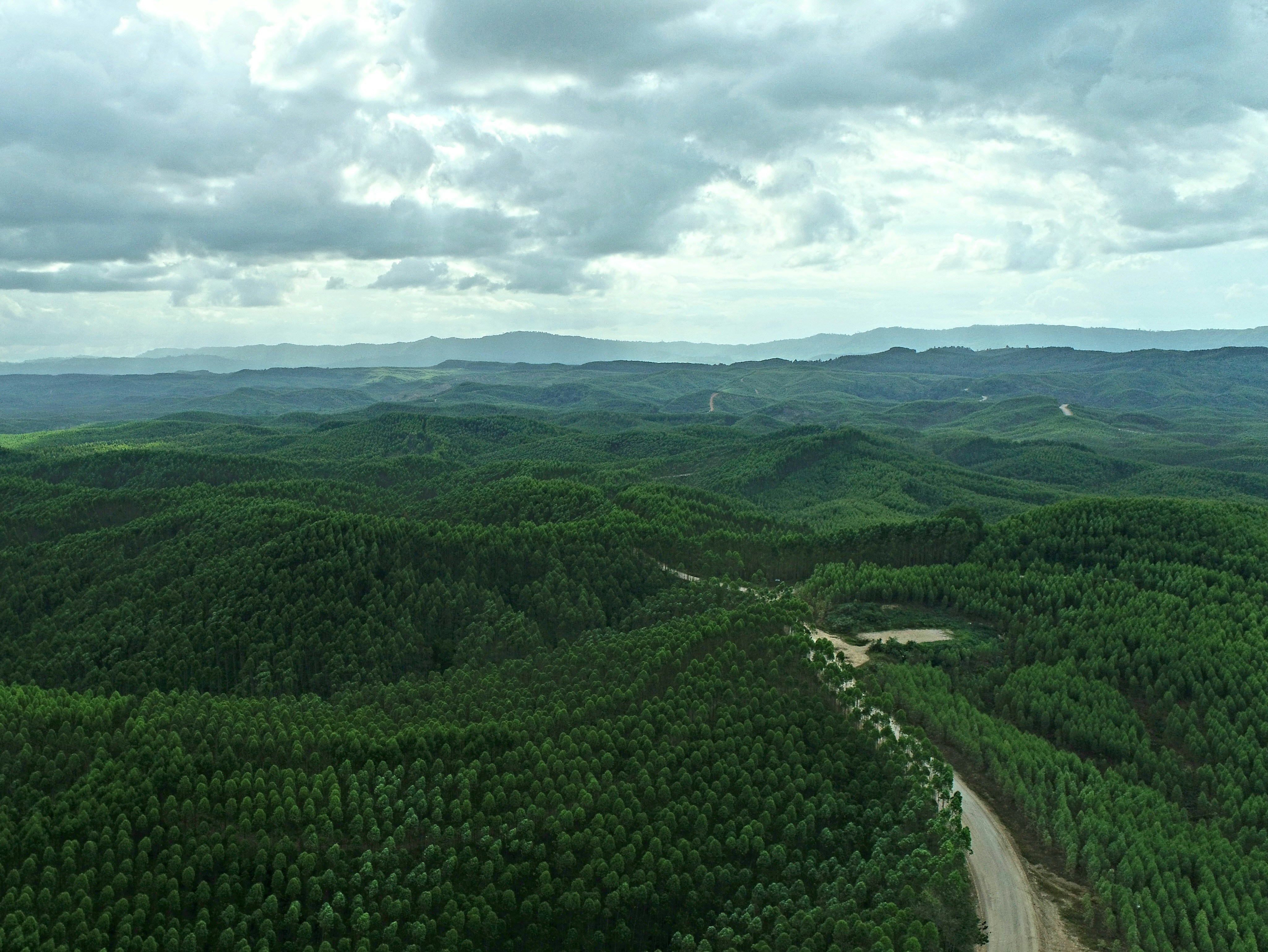
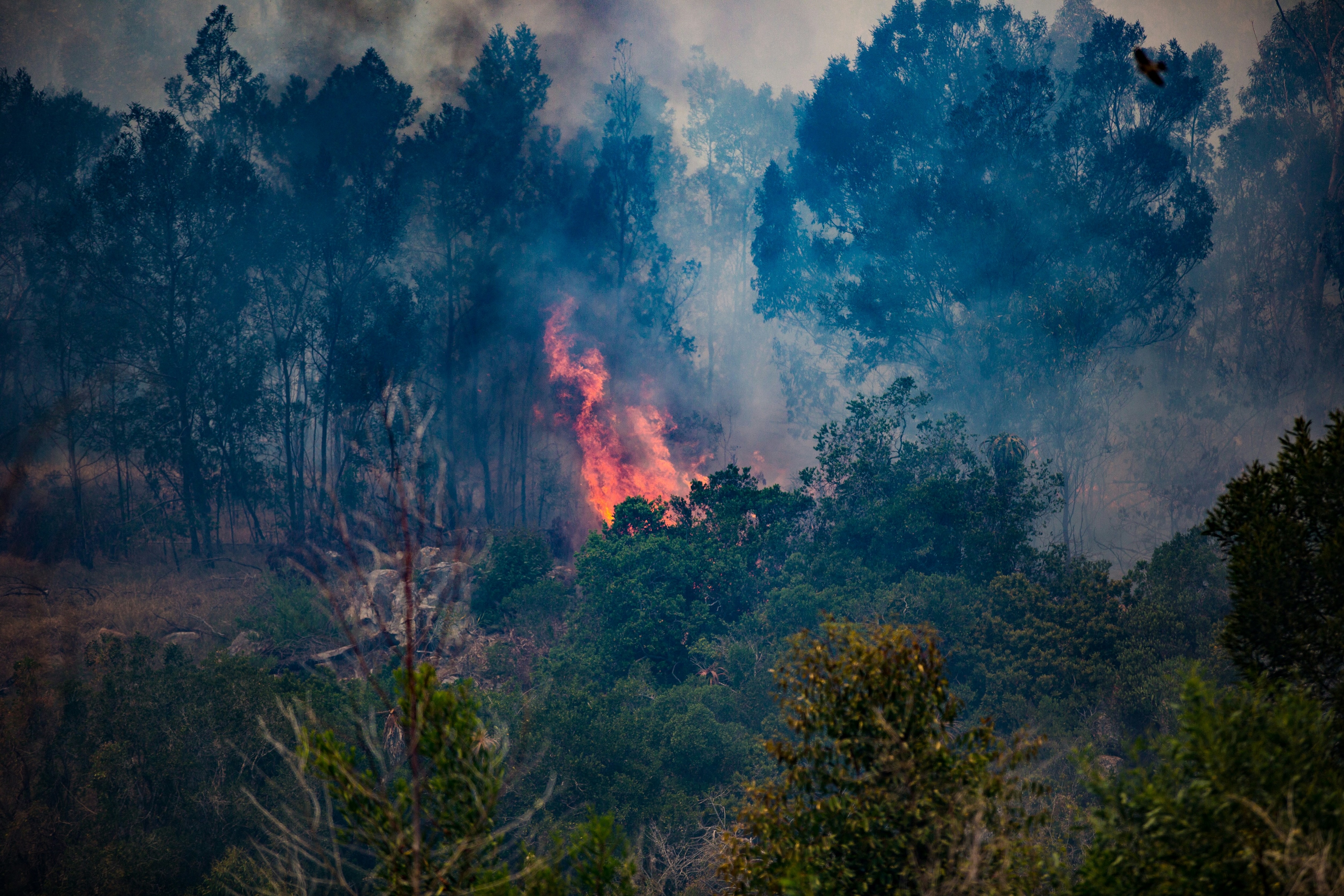
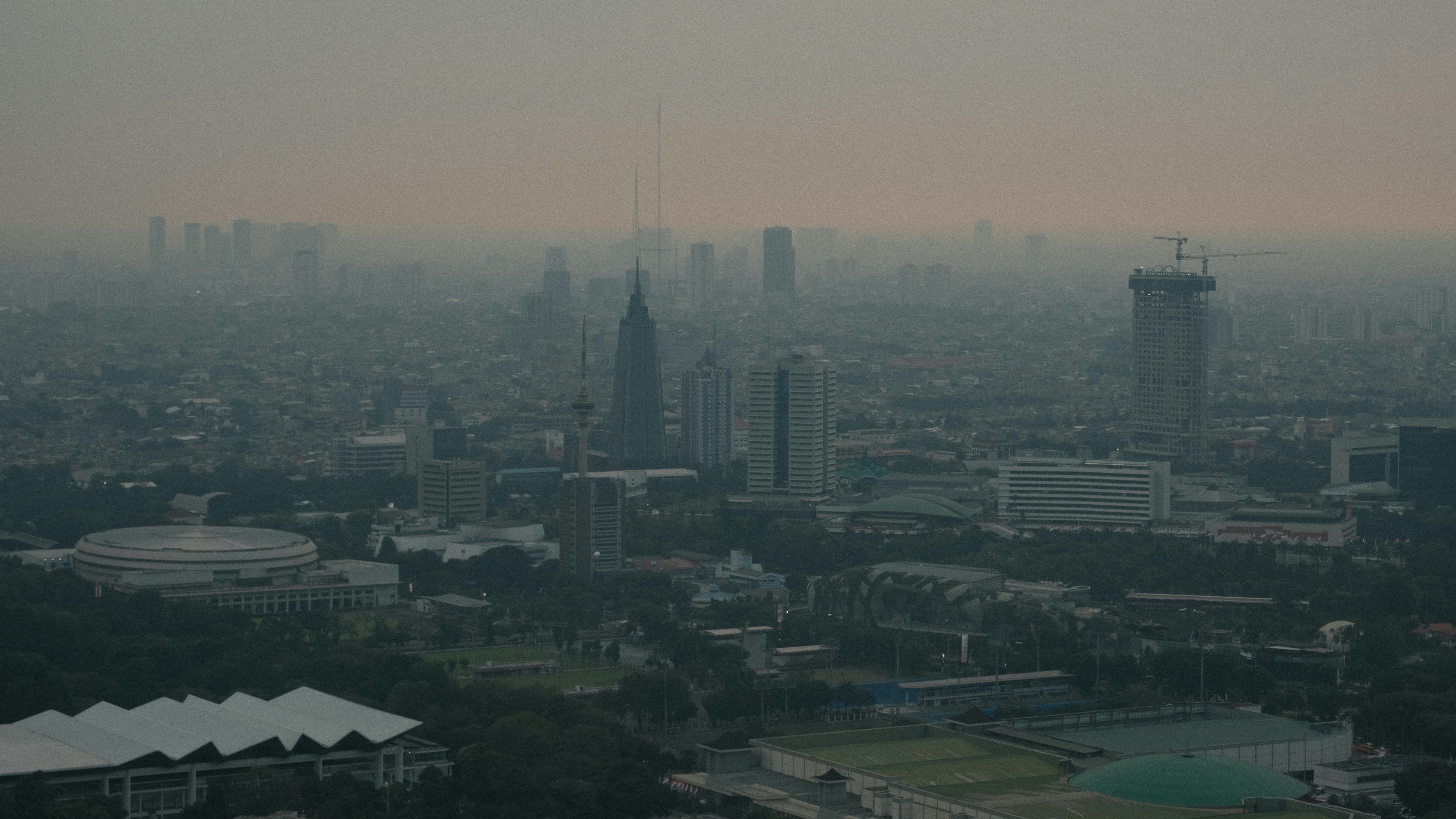
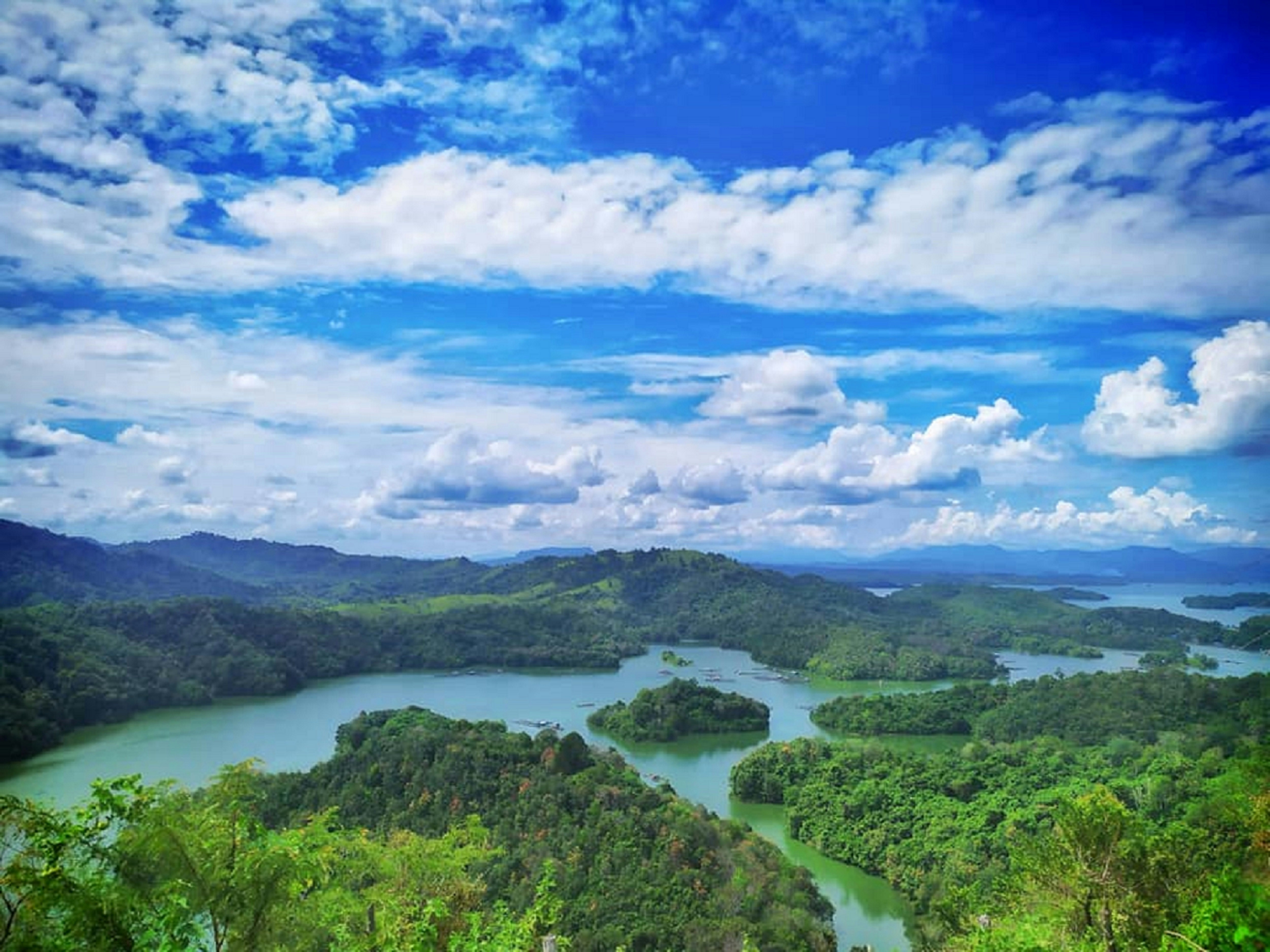
As deforestation drives GHG emissions, biodiversity loss, worsens wild fires and contributes to changes in local climatic conditions, the risk of disasters related to extreme weather also increase.
- Deforestation, forest fire, pollution
Disasters
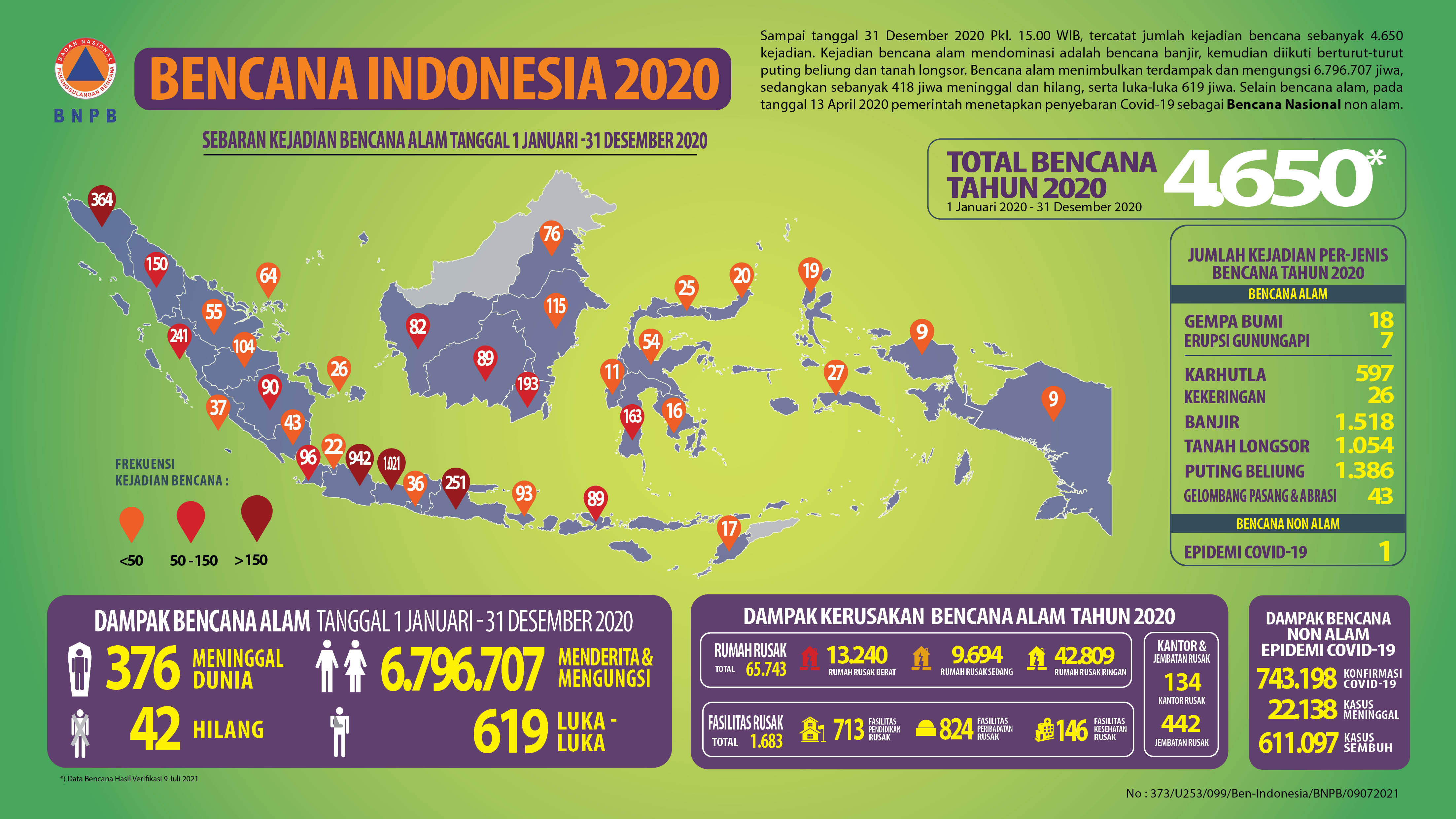
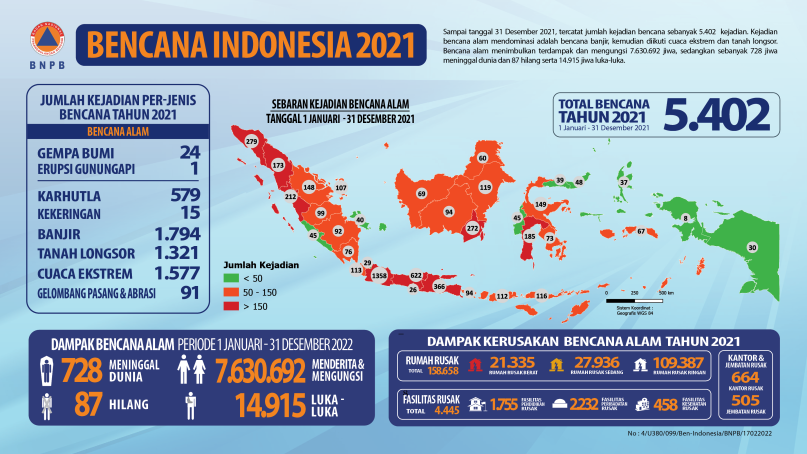
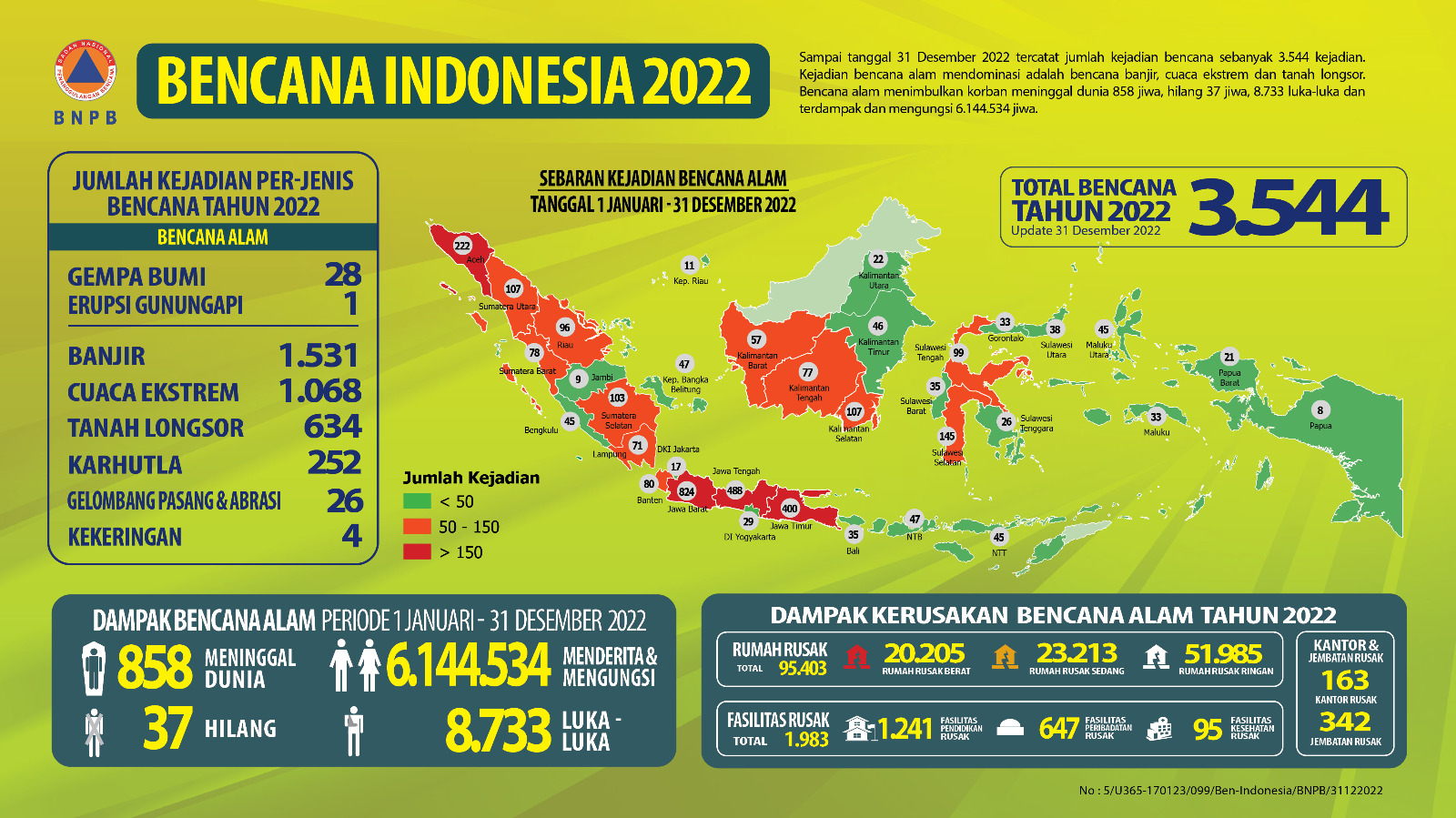
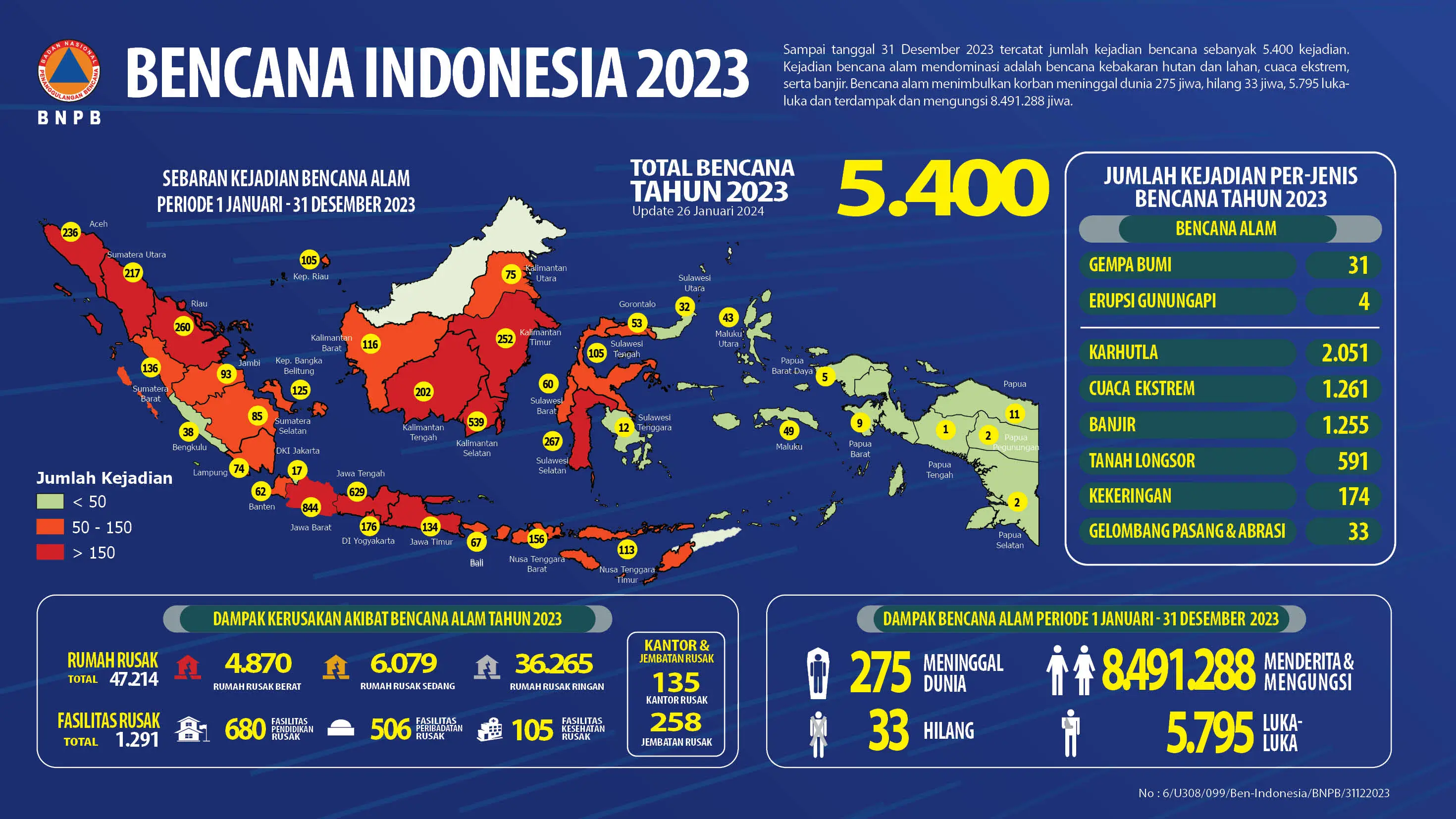
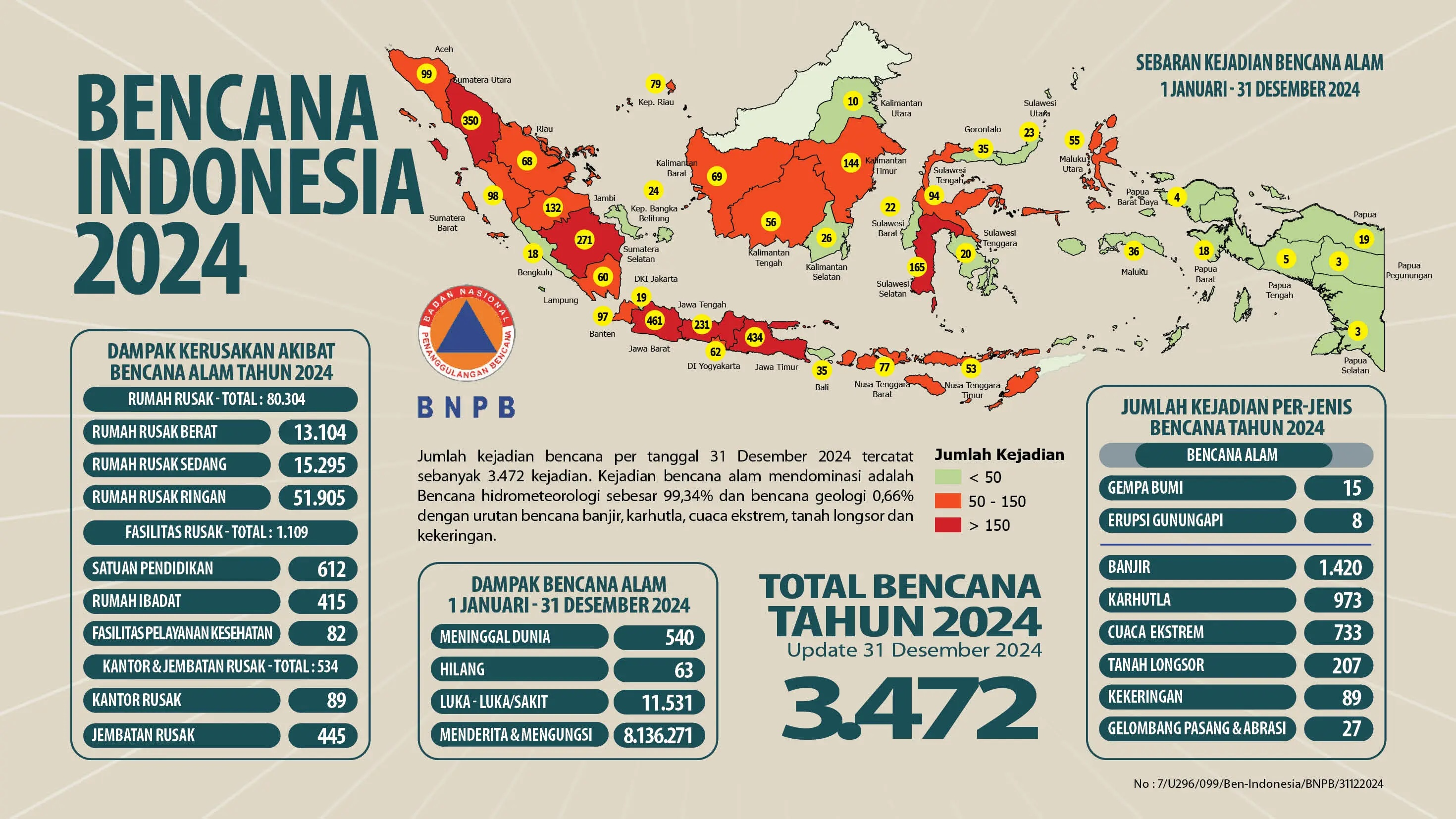
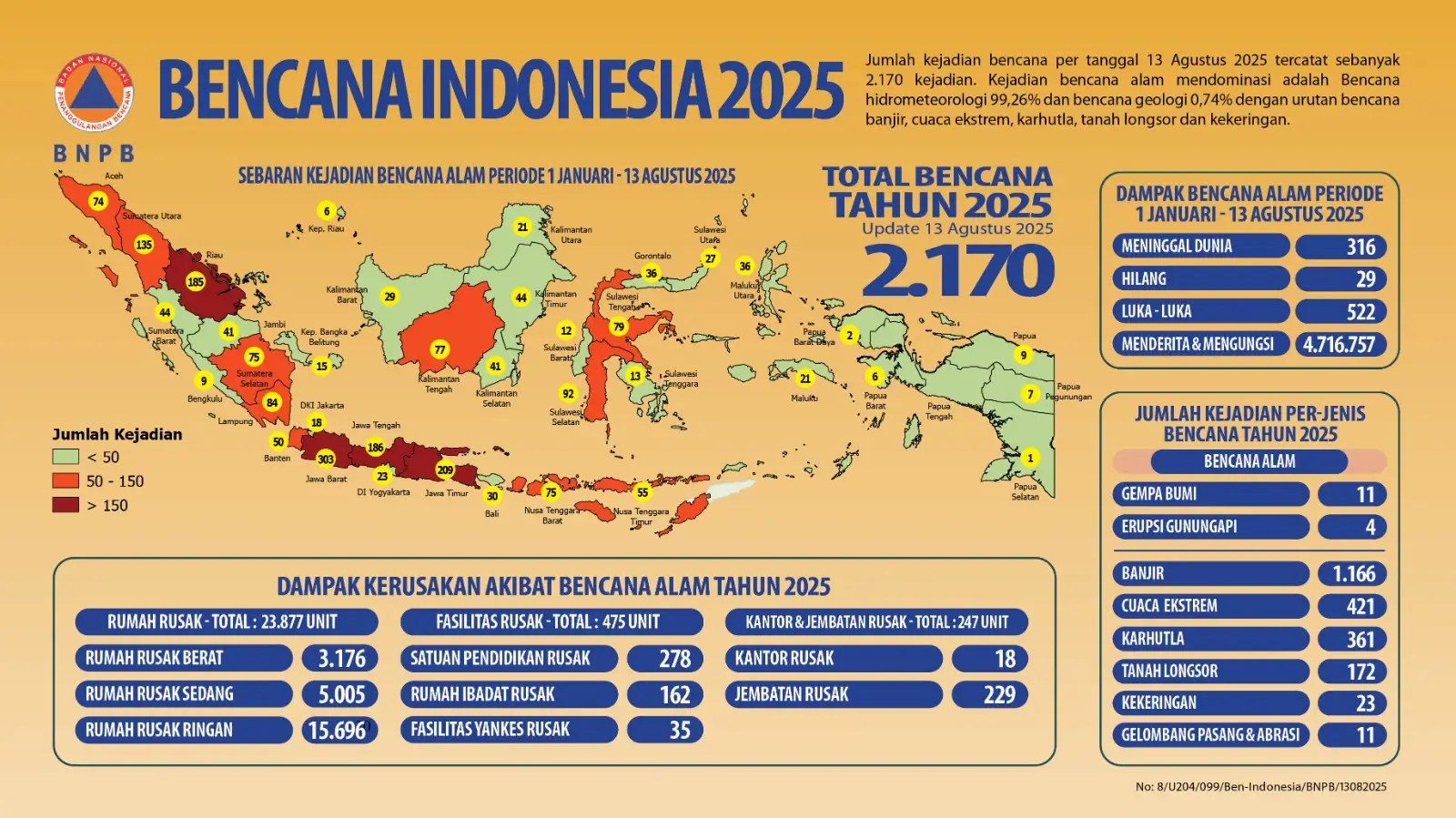
The National Disaster Management Agency (Badan Nasional Penanggulangan Bencana) reports an increase in annual incidences of weather related disasters (flooding, landslides, forest fires) from 928 in 2008 to 4,650 in 2020.
From 2020 onwards the number of weather related disasters continues to increase.
Only half way through 2025, the number of disasters recorded were 2,170.
As climate changes accelerates we can expect the numbers to continue growing.
- Landslide, flooding, drought, forest fire
Implementation Scenarios
Understanding the drivers and impacts of these changes is therefore crucial if the Food Estate Program is to be implemented in a way that balances the goals of food security, biodiversity and climate change mitigation while improving the livelihoods of those directly implicated in the process.
Depending on how Food Estates are implemented these multiple trade-offs will unfold in different ways. Our project takes deeper dives into three provinces to understand the implications of different implementation scenarios (through surveys, interviews, and mapping geospatial data).
Looking in more detail through we can learn more about the relationship between these various impacts on biodiversity and climate as well as the implications for farmer’s livelihoods and the ES on which they depend (e.g. agroecologial agroforestry in Gorontalo).
That understanding must be based on adequate data and communicated in a compelling way to all the stakeholders involved in designing and implementing the Food Estate Program. In addition to the three case studies, our team have been working on a bespoke platform to make accessible a range of public datasets for analysis and visualization to support such an evidence-based understanding of the potential implications of this radical policy.